Can your employees recognize a cyberattack before it reaches your business systems? One overlooked email, unusual login request or unsafe file transfer can expose valuable company information.
Human risk in cybersecurity is the exposure created by employee actions, access privileges and security-related decisions. Managing this risk requires more than technology. Businesses need informed employees, clear security policies and continuous risk monitoring.
This article explores how human risk affects organizations, how to assess employee-related threats and which strategies help build a stronger cybersecurity culture.
What Is Human Risk in Cybersecurity?
Human risk in cybersecurity refers to the possibility of security incidents caused by employee behaviour, compromised accounts or insider activity. Employees handle business applications, customer records, financial information and confidential documents. Every interaction creates potential security exposure.
Human Risk Management (HRM) helps organizations identify these weaknesses, understand their impact and introduce suitable security measures. Unlike traditional awareness training, it focuses on actual behaviour, access privileges and measurable risk reduction.
Why Are Employees the First Line of Defense?
Cybersecurity protection depends on both technical controls and human decisions. Employees often encounter suspicious messages, unexpected requests and unusual account activity before security teams become aware of them. A trained employee can recognize a threat, report it and help prevent further damage.
Three important responsibilities include:
- Recognize: Identify suspicious emails, links and login requests.
- Protect: Follow security policies and safeguard confidential information.
- Report: Inform security teams about unusual activities and potential incidents.
This makes employee cybersecurity awareness an important part of organizational defense.
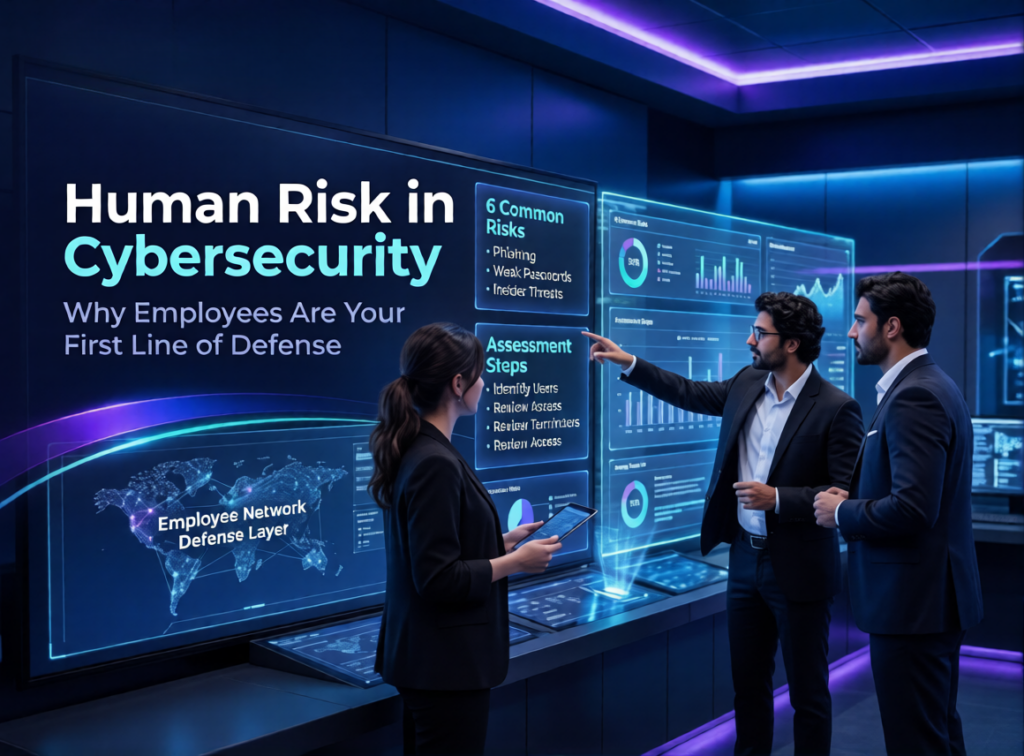
6 Common Human Risks That Businesses Must Address
Human-related security risks take different forms. Understanding them helps businesses identify weaknesses before they affect critical operations.
| Human Risk | Potential Business Impact |
| Phishing | Credential theft and unauthorized access |
| Weak passwords | Account compromise |
| Insider threats | Misuse of sensitive information |
| Social engineering | Fraud and financial loss |
| Accidental data sharing | Confidential information exposure |
| Unsafe AI usage | Unintended data leakage |
1. Phishing and Social Engineering
Cybercriminals use convincing emails, messages and fake websites to manipulate employees. Some attacks imitate suppliers, executives or trusted business partners. Employees should verify unusual requests and report suspicious communications before sharing information or approving transactions.
2. Weak Passwords and Unauthorized Access
Reused passwords and shared credentials increase the possibility of account compromise. Businesses should implement multi-factor authentication (MFA), role-based access controls and regular permission reviews.
3. Insider Threats
Insider threats can involve employees, contractors or individuals with authorized system access. Some incidents result from negligence, while others involve deliberate misuse of information. Organizations should monitor sensitive access, review permissions and establish clear employee security responsibilities.
4. Accidental Data Exposure
Sending confidential files to the wrong recipient or uploading business information to an unapproved platform can create serious security concerns.Data classification, access restrictions and employee guidance help reduce these incidents.
5. AI-Related Human Risks
Generative AI tools introduce new challenges for employee data protection. Employees may unintentionally expose confidential information through prompts, file uploads or unapproved applications. Organizations need clear AI usage policies and controls that define which information can be shared with approved tools.
6. Deepfake and Executive Impersonation
AI-generated voices, videos and messages can make fraudulent requests appear genuine. Attackers may impersonate senior executives to request urgent payments or confidential information. Independent verification and approval procedures help prevent these attacks.
How to Conduct an Employee Cyber Risk Assessment
An employee cyber risk assessment helps organizations understand where human-related security exposure exists. Instead of treating every employee equally, businesses should evaluate risks according to job responsibilities and access levels.
A practical assessment can follow five steps:
| Assessment Step | What to Evaluate |
| Identify users | Employees, contractors and privileged accounts |
| Review access | Systems and sensitive information permissions |
| Assess behaviour | Password practices, reporting and security habits |
| Identify exposure | Phishing, insider risks and unsafe data handling |
| Apply controls | Training, monitoring and access improvements |
Use Role-Based Risk Assessment
Different departments face different cybersecurity challenges.
- Finance: Payment fraud and executive impersonation.
- Human Resources: Employee records and personal information.
- IT Teams: Privileged access and system security.
- Executives: Targeted phishing and business email compromise.
- Developers: Source code exposure and unsafe AI usage.
Role-based assessments help organizations apply relevant security controls.
5 Ways to Reduce Human Risk in Cybersecurity
An effective human risk management strategy combines employee awareness, business processes and technical protection.
1. Provide Continuous Security Awareness Training
Train employees regularly on phishing, password security, social engineering and data protection. Training should reflect real business risks rather than relying on generic presentations.
2. Introduce Phishing Reporting Procedures
Make it easy for employees to report suspicious messages. Encourage early reporting, including when someone accidentally clicks a suspicious link.
3. Strengthen Identity and Access Management
Apply MFA, least-privilege access and regular permission reviews. Remove unnecessary entrance when employees switch roles or leave the company.
4. Establish Clear AI Security Policies
Define acceptable AI requests and acceptable data usage. Employees should understand the risks of uploading sensitive business information to external tools.
5. Measure Security Improvements
Track meaningful indicators to evaluate whether employee security practices are improving.
| Security Metric | What It Measures |
| Phishing reporting rate | Employee threat reporting |
| Repeat risky behaviour | Recurring security weaknesses |
| Training participation | Awareness program engagement |
| Access review completion | Permission management |
| Incident response time | Speed of reporting and action |
These measurements help security teams identify gaps and improve their human risk management programs.
Human Risk and Cybersecurity Requirements in Dubai, Riyadh, Saudi Arabia and the UK
Organizations operating across different markets must consider employee security within their wider cybersecurity and compliance strategies.
Dubai and the UAE: Businesses should integrate employee awareness, access management and data protection into their cybersecurity governance.
Riyadh and Saudi Arabia: The National Cybersecurity Authority’s Essential Cybersecurity Controls include requirements concerning cybersecurity awareness, training and personnel responsibilities for organizations within their applicable scope.
UK: Organizations should address phishing prevention, secure employee practices and incident reporting as part of their cybersecurity risk management approach.
A structured employee security program helps businesses maintain consistent protection across departments and locations.
How CyberWaze Global Helps Organizations Manage Cyber Risk
CyberWaze Global supports businesses in identifying security weaknesses and strengthening their cybersecurity posture.
Our services connect technical protection with business risk management.
- Strategy, Risk & Compliance: Identify security gaps and improve governance.
- Digital Identity: Strengthen identity and access management.
- Application & Data Security: Protect business applications and sensitive information.
- Cyber Defense: Upgrade threat observation and event response.
- Managed Security: Support continuous security monitoring.
Our approach helps organizations address evolving threats through structured security planning and practical controls.
Explore our Cybersecurity Services to strengthen your organization’s security strategy.
Cyber Awareness – Conversations Shaping the Future of Cybersecurity
Cybersecurity continues to evolve as AI and emerging technologies reshape the digital landscape. Understanding these changes requires insights from industry leaders and experienced professionals. In this episode of CyberStudio at GISEC Global 2026,
Eman Al Awadhi, CEO of Connect21, joins Ian Austin for a conversation about her journey in cybersecurity, the growing role of AI and the future of the industry. Watch the discussion to explore expert perspectives and gain insights into the changing cybersecurity landscape.
Watch the CyberStudio Conversation
Latest Cybersecurity Insights from CyberWaze Global
Stay updated with practical cybersecurity guidance, industry developments and awareness content.
Follow CyberWaze Global for our latest updates.
Explore Our Latest Instagram Posts
Final Thoughts
Cybersecurity is not only about protecting networks, applications and devices. It also depends on the people who use them. Organizations that understand human risk can make better security decisions, improve employee awareness and reduce unnecessary exposure. Make your people part of your cybersecurity defense strategy with CyberWaze Global.
Frequently Asked Questions
Q1. What is human risk in cybersecurity?
Human risk is the possibility of cyber incidents caused by employee behaviour, human error, compromised accounts or insider activity.
Q2. How do employees contribute to cybersecurity risks?
Employees may create security exposure through weak passwords, phishing interactions, unauthorized data sharing or unsafe application usage.
Q3. What is human risk management?
Human Risk Management identifies, assesses and reduces employee-related cybersecurity exposure through training, monitoring and security controls.
Q4. How can businesses improve employee cybersecurity awareness?
Businesses can introduce regular training, phishing reporting procedures, role-based education and clear security policies.
Q5. Why is employee cyber risk assessment vital?
It helps organizations identify vulnerable processes, excessive access privileges and risky employee practices before they lead to security incidents.