
Are you confident that your business systems, sensitive data and digital functioning are properly protected? Even organisations with existing security tools can have weaknesses that remain unnoticed until a security incident occurs.
A cybersecurity risk assessment helps businesses identify security weaknesses, evaluate potential threats and understand where stronger protection is needed. It provides a structured way to prioritise risks and improve overall security.
In this guide, we explore how businesses can identify security gaps, assess potential threats and build a stronger cybersecurity strategy through practical risk management.
What Is a Cybersecurity Risk Assessment?
A cybersecurity risk assessment is a structured procedure that assess an organisation’s digital benefit, security controls, vulnerabilities, and possible cyber threats.
It helps businesses understand:
- Which systems and information need protection.
- Where existing security controls may be insufficient.
- Which threats could affect business operations.
- What actions should be prioritised to reduce risk.
Rather than focusing only on technical vulnerabilities, an effective assessment considers business impact, operational continuity and regulatory responsibilities.
Why Is Cybersecurity Risk Assessment Important for Businesses?
Businesses rely on interconnected systems, cloud platforms, applications and digital information. A weakness in one area can create opportunities for attackers to access critical resources.
A regular IT security risk assessment helps organisations identify these weaknesses before they develop into larger problems.
Key benefits include:
- Reduced Security Exposure: Identify weaknesses before they are exploited.
- Data Protection: Improve safeguards for sensitive business and customer information.
- Business Continuity: Reduce the likelihood of disruptive security incidents.
- Regulatory Readiness: Understand gaps against relevant security and compliance requirements.
- Better Decision-Making: Direct security investments towards the most important risks
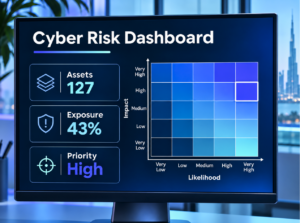
7 Key Areas to Check During a Cybersecurity Risk Assessment
A complete assessment should examine the following areas to understand an organisation’s overall security position.
1. Network and Infrastructure Security
Review network configurations, firewalls, remote access, connected devices and infrastructure security controls.
Unsecured connections, outdated systems and poor network segmentation can expose critical business resources.
2. Identity and Access Management
Evaluate how employees, administrators and third parties access business systems.
Check for weak passwords, excessive permissions, inactive accounts and missing multi-factor authentication (MFA).
3. Application and Data Security
Assess business applications, databases, APIs and information storage practices.
Look for insecure configurations, insufficient encryption, outdated software and weaknesses in data access controls.
4. Cloud and Third-Party Security
Review cloud environments, external service providers and supplier access.
Businesses should understand how third parties handle sensitive information and whether appropriate security responsibilities are established.
5. Endpoint and Device Protection
Check laptops, desktops, mobile devices and other connected endpoints.
Unpatched software, weak endpoint protection and unmanaged devices can increase the organisation’s attack surface.
6. Employee Security Awareness
Human behaviour remains an important part of cybersecurity.
Review employee awareness of phishing, suspicious attachments, password security and safe information-sharing practices.
7. Incident Response and Business Continuity
Evaluate whether the organisation has documented incident response procedures, reliable backups and recovery plans.
Security teams should understand how to detect, contain and respond to incidents while maintaining essential operations.
How to Identify Business Security Gaps: A Practical Process
An effective cyber risk assessment should follow a structured approach rather than relying on random security checks.
| Assessment Stage | What to Evaluate | Expected Outcome |
| Asset Identification | Systems, applications and sensitive data | Clear asset inventory |
| Threat Identification | Potential attackers and threat scenarios | Understanding of exposure |
| Vulnerability Assessment | Technical and operational weaknesses | Identified security gaps |
| Risk Analysis | Likelihood and business impact | Prioritised risk levels |
| Control Evaluation | Existing security measures | Control effectiveness |
| Remediation Planning | Required security improvements | Actionable security roadmap |
This process helps organisations understand their current security posture and make informed decisions about improvements.
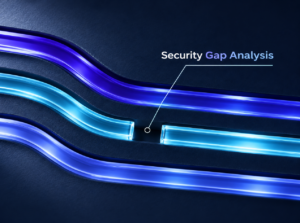
How to Prioritise Cybersecurity Risks
Not every security weakness creates the same level of business risk. Organisations should evaluate vulnerabilities according to their likelihood of exploitation and potential impact.
A simple risk model is:
Risk Level = Likelihood × Impact
| Risk Level | Business Priority | Recommended Action |
| Critical | Immediate attention | Address urgent exposure |
| High | High priority | Implement corrective controls |
| Medium | Planned improvement | Reduce weaknesses through scheduled actions |
| Low | Routine monitoring | Review and maintain existing controls |
For example, compromised administrator access to critical business systems may create a greater risk than a minor configuration issue on an isolated device. Risk prioritisation ensures that limited resources are directed towards the weaknesses that matter most.
Which Cybersecurity Frameworks Can Help Identify Security Gaps?
Recognised frameworks provide structured guidance for evaluating security controls and improving organisational maturity.
Some commonly used frameworks include:
- NIST Cybersecurity Framework: Helps organisations manage cybersecurity risks through structured security outcomes.
- ISO/IEC 27001: Provides requirements for starting and improving an Information Security Management System (ISMS).
- CIS Controls: Offers prioritised security practices to strengthen protection against common threats.
The appropriate framework depends on business requirements, industry expectations, regulatory obligations and existing security maturity.
How CyberWaze Global Helps Businesses Strengthen Security
Identifying security gaps is only the first step. Businesses also need a practical strategy to address weaknesses and improve their security capabilities.
CyberWaze Global provides cybersecurity consulting and professional services that help organisations assess risks, strengthen security controls and improve their overall security posture.
Its relevant capabilities include:
- Strategy, Risk & Compliance: Security assessments, governance, risk management and compliance support.
- Infrastructure & OT/IoT Security: Strengthening infrastructure and operational technology environments.
- Digital Identity: Improving identity governance and access management.
- Application & Data Security: Protecting business applications and sensitive information.
- Cyber Defense: Supporting threat detection, assessment and response.
- Managed Security: Improving ongoing security monitoring and protection.
With a structured approach to cybersecurity, organisations can better understand their exposure and develop security improvements aligned with business objectives.
Cyber Awareness: Understand the Risks Before They Become Incidents
Cybersecurity awareness helps employees and business leaders recognise common threats and make safer decisions.
Explore our cybersecurity awareness content through the CyberWaze Global YouTube podcast.
YouTube Cyber Awareness & Podcast
Cybersecurity Insights and Updates
Follow CyberWaze Global on LinkedIn for professional insights, security awareness updates and discussions about emerging cybersecurity challenges.
Final Thoughts
A cybersecurity risk assessment gives businesses a clearer understanding of their security weaknesses and potential exposure. By identifying gaps, prioritising improvements and reviewing controls regularly, organisations can build stronger and more resilient security environments. CyberWaze Global helps businesses strengthen their cybersecurity strategy through risk assessment, security consulting and professional security services.
Frequently Asked Questions
Q1. What is the main purpose of a cybersecurity risk assessment?
Its main purpose is to identify security weaknesses, evaluate potential threats and prioritise actions that reduce business risk.
Q2. How often should a business conduct a cybersecurity risk assessment?
Businesses should conduct assessments regularly and whenever significant changes occur, such as new technology deployments, infrastructure changes or security incidents.
Q3. What is the difference between a vulnerability assessment and a risk assessment?
A vulnerability assessment identifies technical weaknesses, while a risk assessment evaluates potential threats, likelihood, business impact and existing security controls.
Q4. Can small and medium-sized businesses benefit from cybersecurity risk assessments?
Yes. Businesses of all sizes can benefit by identifying weaknesses, protecting sensitive information and improving their security practices.
Q5. How can organisations improve their cybersecurity posture after an assessment?
They can address high-priority findings, strengthen access controls, improve monitoring, update security policies and establish a continuous risk management process.