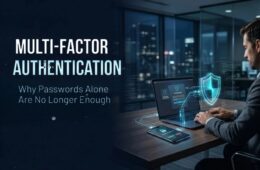
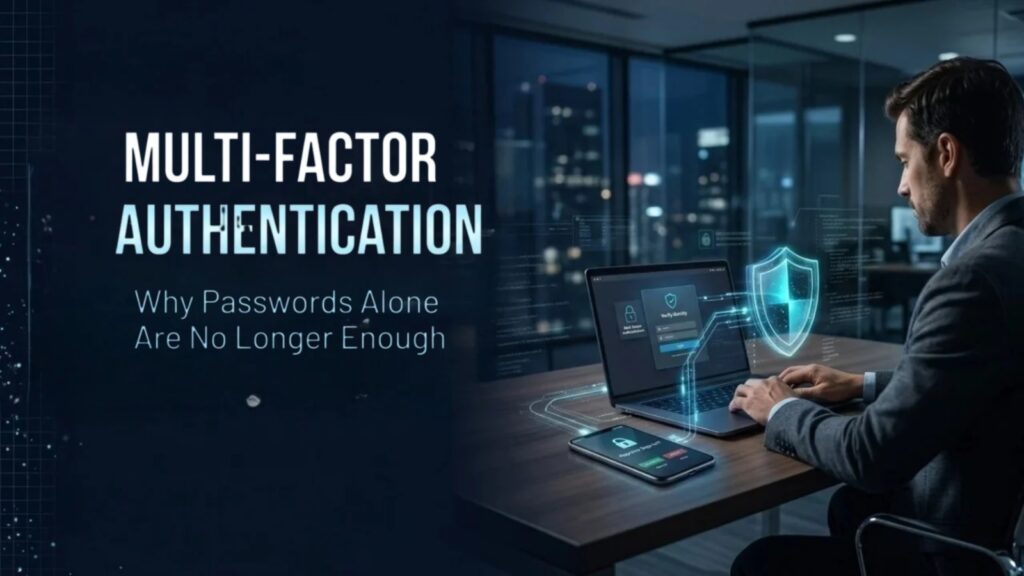
Are your business accounts protected if someone discovers your password? A single stolen password can expose company emails, sensitive files and critical business systems.
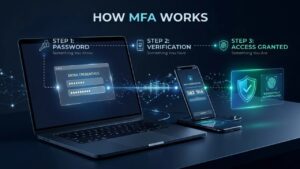
Multi-Factor Authentication (MFA) adds an extra layer of identity verification by requiring two or more authentication factors. It helps prevent unauthorized access, even when a password has been compromised.
In this article, we explore how MFA works, why businesses need it and which authentication methods offer stronger protection against modern cyber threats.
What Is Multi-Factor Authentication (MFA)?
Multi-Factor Authentication (MFA) is a safety method that examines a user’s specification through two or more different authentication components before permitting access. It combines different forms of verification to make unauthorized access more difficult. Businesses can strengthen their identity security through Digital Identity Management, Authentication Services and Identity Governance Solutions.
The Three Main Authentication Factors
| Authentication Factor | What It Means | Examples |
| Something You Know | Information only the user should know | Password or PIN |
| Something You Have | A device or security credential | Smartphone or security key |
| Something You Are | A unique biometric feature | Fingerprint or facial recognition |
MFA needs at least two different part categories. Using two passwords does not count as proper MFA.
Why Are Passwords Alone No Longer Enough?
Passwords remain an important security measure, but they have several weaknesses. Cybercriminals use different techniques to obtain login credentials and access business accounts.
Common threats include:
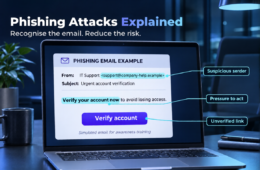
- Phishing Attacks: Dummy emails and websites plan to take login details.
- Credential Stuffing: Reusing stolen passwords across multiple accounts.
- Brute-Force Attacks: Trying different password combinations to gain access.
- Password Spraying: Testing frequently used passwords against different accounts.
- Social Engineering: Tricking employees into sharing private information.
Even a strong password can become a security risk if it is exposed, reused or entered on a fraudulent website. MFA makes it stiff for attackers to access accounts using stolen credentials alone.
Key Benefits of MFA for Business Security
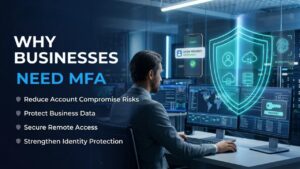
Implementing MFA helps organizations strengthen access controls and reduce identity-related risks.
| Benefit | Business Security Value |
| Account Protection | Reduces unauthorized account access |
| Data Security | Adds protection to sensitive business information |
| Remote Access Security | Strengthens verification for remote employees |
| Compliance Support | Helps support access security requirements |
| Identity Protection | Makes stolen credentials less useful to attackers |
MFA is particularly important for corporate email, cloud platforms, financial systems, administrator accounts and remote access environments.
What Are the Different Types of MFA?
Not all authentication methods provide the same level of protection. Businesses should select methods based on their security requirements and potential risks.
1. SMS and Email Verification
A temporary code is sent through a text message or email. It is easy to use but can be exposed through phishing, SIM swapping or compromised email accounts.
2. Authenticator Applications
Applications generate temporary verification codes or send login approval requests. They provide an additional layer of protection compared with password-only authentication.
3. Biometric Authentication
Users verify their identity through fingerprints or facial recognition. This method can make authentication more convenient while strengthening identity verification.
4. Hardware Security Keys
Physical security keys provide strong authentication and can help prevent phishing when implemented with suitable protocols.
5. Passkeys and Phishing-Resistant MFA
Passkeys and FIDO2-based security keys use cryptographic authentication to reduce exposure to traditional password theft and phishing. For organizations handling sensitive information, phishing-resistant MFA should be an important consideration when selecting authentication methods.
How Can Businesses Implement MFA Effectively?
A successful MFA strategy requires more than simply enabling verification codes. Organizations should create an access security plan that considers users, devices, applications and business risks.
| Implementation Step | Recommended Action |
| 1. Identify Critical Accounts | Prioritize email, cloud and administrator accounts |
| 2. Select Authentication Methods | Choose methods according to security requirements |
| 3. Protect Privileged Accounts | Apply stronger controls to high-access users |
| 4. Create Access Policies | Define who can access specific business resources |
| 5. Train Employees | Explain phishing and fraudulent login requests |
| 6. Monitor Authentication | Review unusual login activity and access attempts |
Businesses should also maintain secure account recovery procedures and backup authentication methods to avoid unnecessary operational disruption.
MFA and Business Cybersecurity in Dubai, Riyadh and the UK
Organizations operating in Dubai, Riyadh, Saudi Arabia and the UK increasingly depend on cloud platforms, remote access and interconnected business systems.
These environments require effective identity verification and controlled access to sensitive resources.
A practical MFA strategy can help businesses:
- Protect employee and administrator accounts.
- Secure cloud applications and remote connections.
- Reduce risks associated with compromised credentials.
- Improve visibility into user access.
- Support wider cybersecurity and compliance programmes.
Organizations should align authentication controls with their applicable regulatory requirements, industry standards and internal risk policies.
Common MFA Mistakes Businesses Should Avoid
MFA can lose effectiveness when organizations do not configure and manage it properly.
Avoid these common mistakes:
- Relying only on SMS-based verification for high-risk accounts.
- Ignoring administrator and privileged accounts.
- Allowing repeated login approval requests without user verification.
- Failing to monitor suspicious authentication activity.
- Keeping inactive employee accounts enabled.
- Treating MFA as a replacement for other cybersecurity controls.
Traditional MFA methods can still be vulnerable to phishing and authentication attacks. Organizations should consider phishing-resistant authentication, access monitoring and additional identity security controls.
Cyber Awareness Resource – Build Stronger Authentication Habits
Technology alone cannot prevent every security incident. Employees must recognize how attackers utilize passwords, login requests and authentication procedures. Regular cyber awareness training helps employees recognize suspicious login attempts, phishing messages and unexpected MFA approval requests. Explore this video to learn about AI governance, responsible AI adoption and digital security practices: Watch Here
Latest Cybersecurity Updates from CyberWaze Global
Stay informed about current cybersecurity practices, identity protection and emerging digital threats. Follow our latest updates and awareness content on Instagram: Explore Our Latest Cybersecurity Post on Instagram
Strengthen Your Business Identity Security with CyberWaze Global
Strong authentication is an essential part of modern business security. However, effective protection also requires identity governance, privileged access controls and continuous security improvements. CyberWaze Global supports organizations through cybersecurity consulting, digital identity management and authentication services.
Explore our Privileged Access Management Solutions to strengthen control over sensitive accounts and critical business systems. Ready to improve your organization’s identity security? Book a Cybersecurity Consultation with CyberWaze Global
FAQ’s
Q1. What is Multi-Factor Authentication (MFA)?
MFA is a safety method that needs two or more different authentication components to examin a user’s specification before granting access.
Q2. Why is MFA important for businesses?
MFA helps protect business accounts against unauthorized access, stolen passwords, phishing and credential-based attacks.
Q3. What is the difference between MFA and 2FA?
2FA requires exactly two authentication factors, while MFA is a broader method that uses two or more authentication factors.
Q4. Which MFA method is the most secure?
Phishing-resistant methods such as FIDO2 security keys and passkeys provide stronger protection against many credential theft and phishing attacks.
Q5. Can MFA prevent all cyberattacks?
No. MFA reduces the risk of unauthorized access but cannot prevent every cyberattack. Businesses also need monitoring, employee awareness, access management and other cybersecurity controls.