Have you ever received an email that looked like it came directly from your CEO, manager or trusted business partner? What if that email was literally sent by a cybercriminal?
Business Email Compromise (BEC) is a targeted cyberattack where criminals impersonate trusted individuals or compromise business email accounts to steal money or sensitive information. Unlike traditional phishing, BEC attacks often use trusted business relationships and convincing communication to deceive employees and executives.
In this guide, we explore how BEC attacks work, common scams, real-world examples, warning signs, and practical prevention strategies businesses can use to protect their employees and financial operations.
What Is Business Email Compromise (BEC)?
Business email compromise is a form of cybercrime in which attackers impersonate company executives, employees, suppliers or trusted partners through email. The business email compromise definition focuses on deception and unauthorized access. Attackers manipulate normal business communication to request payments, change bank details or obtain confidential information.
These attacks commonly target:
- CEOs and senior executives
- Finance and accounting departments
- HR and payroll teams
- Suppliers and business partners
- Employees handling confidential information
Businesses operating in Dubai, Riyadh, Saudi Arabia and the UK should pay particular attention to email security and financial approval processes.
How Does Business Email Compromise Work?
Understanding how does business email compromise work helps organizations recognize suspicious activity before financial or data losses occur.
Most BEC attacks follow a simple process:
| Attack Stage | What Happens |
| 1. Research | Attackers study employees, executives and business relationships. |
| 2. Targeting | They identify finance teams, executives or suppliers. |
| 3. Impersonation | They create fake email addresses or compromise legitimate accounts. |
| 4. Manipulation | They send crucial payment requests or unresponsive information requests. |
| 5. Financial Fraud | Victims transfer money or share confidential information. |
Attackers may also use compromised accounts to monitor email conversations, create hidden inbox rules and hijack existing business discussions.

Common Business Email Compromise Attacks
A business email compromise attack can take several forms depending on the target and the attacker’s objective.
The most common techniques include:
1. CEO Fraud
Attackers impersonate senior executives and send urgent payment requests to finance employees.
2. Invoice Fraud
Criminals send fake invoices or modify legitimate supplier payment details to redirect funds.
3. Account Compromise
Attackers gain access to genuine business email accounts and use them to communicate with trusted contacts.
4. Payroll Diversion
Employees receive fraudulent requests to change salary payment details, redirecting wages into attacker-controlled accounts.
5. Vendor Impersonation
Attackers pretend to be trusted suppliers and request changes to bank account information. These techniques make business email compromise scams difficult to identify without proper verification procedures.
Business Email Compromise Examples
Understanding business email compromise examples makes it easier for employees to recognize suspicious communication.
| Example | Attacker’s Approach | Potential Impact |
| CEO Payment Request | Fake urgent email from the CEO | Unauthorized transfer |
| Supplier Bank Change | Fraudulent updated bank details | Invoice payment loss |
| HR Payroll Request | Fake employee payment update | Salary diversion |
| Executive Impersonation | Request for confidential documents | Data exposure |
| Email Thread Hijacking | Attacker joins an existing conversation | Financial fraud |
Example scenario
An accounts worker accepts an email that arise to approach from the company’s CEO. The message requests an acute remittance to a new bank account. Because the request appears genuine, the employee processes the transaction without confirming it.
The money reaches the attacker’s account before the business identifies the fraud. This is why payment verification should never depend on email instructions alone.
Business Email Compromise vs Phishing
Although both attacks involve deception, business email compromise vs phishing have important differences.
| Comparison | Business Email Compromise | Traditional Phishing |
| Main Target | Employees and executives | Individual users |
| Main Goal | Financial fraud or data theft | Credentials or sensitive information |
| Approach | Impersonation and trusted communication | Deceptive messages and links |
| Common Method | Fake payment requests | Malicious links and attachments |
| Detection | Behaviour and communication analysis | Link and attachment analysis |
BEC attacks may also begin with phishing. However, they often involve more targeted social engineering and business-specific manipulation.
Signs of Business Email Compromise
Recognizing the signs of business email compromise can help employees report suspicious activity before an attack succeeds.
Watch for these warning signs:
- Unexpected requests for urgent payments.
- Changes to supplier bank details.
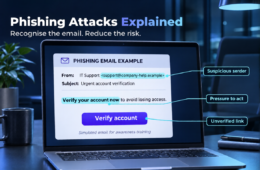
- Slightly altered sender email addresses.
- Requests to bypass normal approval procedures.
- Unusual communication from senior executives.
- Unexpected requests for confidential information.
- Suspicious email forwarding rules or login activity.
Employees should identify uncommon requests through a separate trusted communication channel.

Business Email Compromise Detection
Effective business email compromise detection requires more than checking email content.
Organizations should monitor:
- Unusual login locations and account activity.
- Suspicious inbox forwarding rules.
- Unexpected changes to MFA settings.
- Unusual communication patterns.
- Lookalike domains and sender impersonation.
- Abnormal payment and financial requests.
Business email compromise tools such as secure email gateways, identity monitoring, email authentication and threat detection solutions can help identify suspicious behaviour.
Useful technical controls include SPF, DKIM and DMARC, alongside multi-factor authentication (MFA). However, technology should work alongside employee awareness and internal verification procedures.
Business Email Compromise Prevention
Strong business email compromise prevention requires a combination of technical controls, employee training and clear business processes.
Here are practical steps organizations can implement:
| Prevention Measure | Business Benefit |
| Multi-Factor Authentication | Adds protection to email accounts. |
| Email Authentication | Helps prevent domain spoofing. |
| Employee Training | Improves awareness of suspicious requests. |
| Payment Verification | Reduces unauthorized financial transfers. |
| Access Control | Limits unnecessary account permissions. |
| Security Monitoring | Helps identify unusual activity. |
| Incident Response Planning | Supports faster investigation and recovery. |
How to Prevent Business Email Compromise Through Employee Training
Business email compromise training should help employees understand how attackers manipulate workplace communication.
Organizations should:
- Conduct regular cybersecurity awareness sessions.
- Train finance teams to verify payment changes.
- Encourage employees to report suspicious emails.
- Establish clear financial approval procedures.
- Conduct simulated phishing exercises.
- Review access permissions regularly.
These practices are particularly important for organizations managing financial transactions, supplier relationships and executive communications.
How CyberWaze Global Helps Businesses Strengthen Email Security
Protecting business communication requires a structured cybersecurity approach. CyberWaze Global supports organizations through professional cybersecurity consulting, risk management and security services.
Its capabilities include:
- Strategy, Risk & Compliance: Identify security gaps and strengthen risk management.
- Digital Identity: Upgrade name governance and access security.
- Cyber Defense: Strengthen threat detection and incident response.
- Managed Security: Support ongoing monitoring and threat management.
- Application & Data Security: Protect sensitive business information.
Businesses looking for stronger business email compromise protection can benefit from reviewing their existing security controls, employee practices and incident response readiness.
Cyber Awareness – Learn to Recognize Email Threats
Cybersecurity awareness assists employees in accepting doubtful emails, understand social engineering and make safer resolution. Explore CyberWaze Global’s cybersecurity awareness content through our YouTube podcast. Watch Our Cyber Awareness Podcast
Latest Cybersecurity Insights from CyberWaze Global
Stay updated with cybersecurity awareness, emerging threats and practical security recommendations. Follow CyberWaze Global for professional insights and the latest updates.
Follow CyberWaze Global on LinkedIn
Conclusion
Business email compromise remains a serious cybersecurity risk because attackers exploit trust, business relationships and everyday communication. Organizations can reduce their exposure through strong authentication, email monitoring, employee awareness and verified financial procedures.
CyberWaze Global helps businesses strengthen their cybersecurity posture through risk management, cyber defense and managed security services. Protect your employees, secure business communication and strengthen your organization’s cyber resilience. Explore Managed Security Services to learn more about strengthening your safety functioning.
Frequently Asked Questions
Q1. What is the main purpose of business email compromise?
The main purpose is to deceive employees or executives into transferring money, sharing confidential information or making unauthorized business changes.
Q2. How do attackers target company executives?
Attackers research executives, impersonate their email identities or compromise their accounts to send convincing requests to employees and business partners.
Q3. What is the difference between BEC and phishing?
Phishing commonly uses deceptive links or attachments, while BEC focuses on impersonation, trusted communication and fraudulent business requests.
Q4. How can businesses prevent BEC attacks?
Businesses can use MFA, email authentication, employee training, financial verification procedures, and continuous security monitoring.
Q5. What should employees do if they receive a suspicious business email?
They should avoid responding or processing requests, verify the sender through another trusted channel, and immediately report the email to their IT or security team.